Resources • Roof Problems
Common Roof Problems in Sarasota
The symptoms homeowners notice first, what usually causes them in Florida's climate, and whether they point to a repair or a new roof.
Key takeaway: the short answer
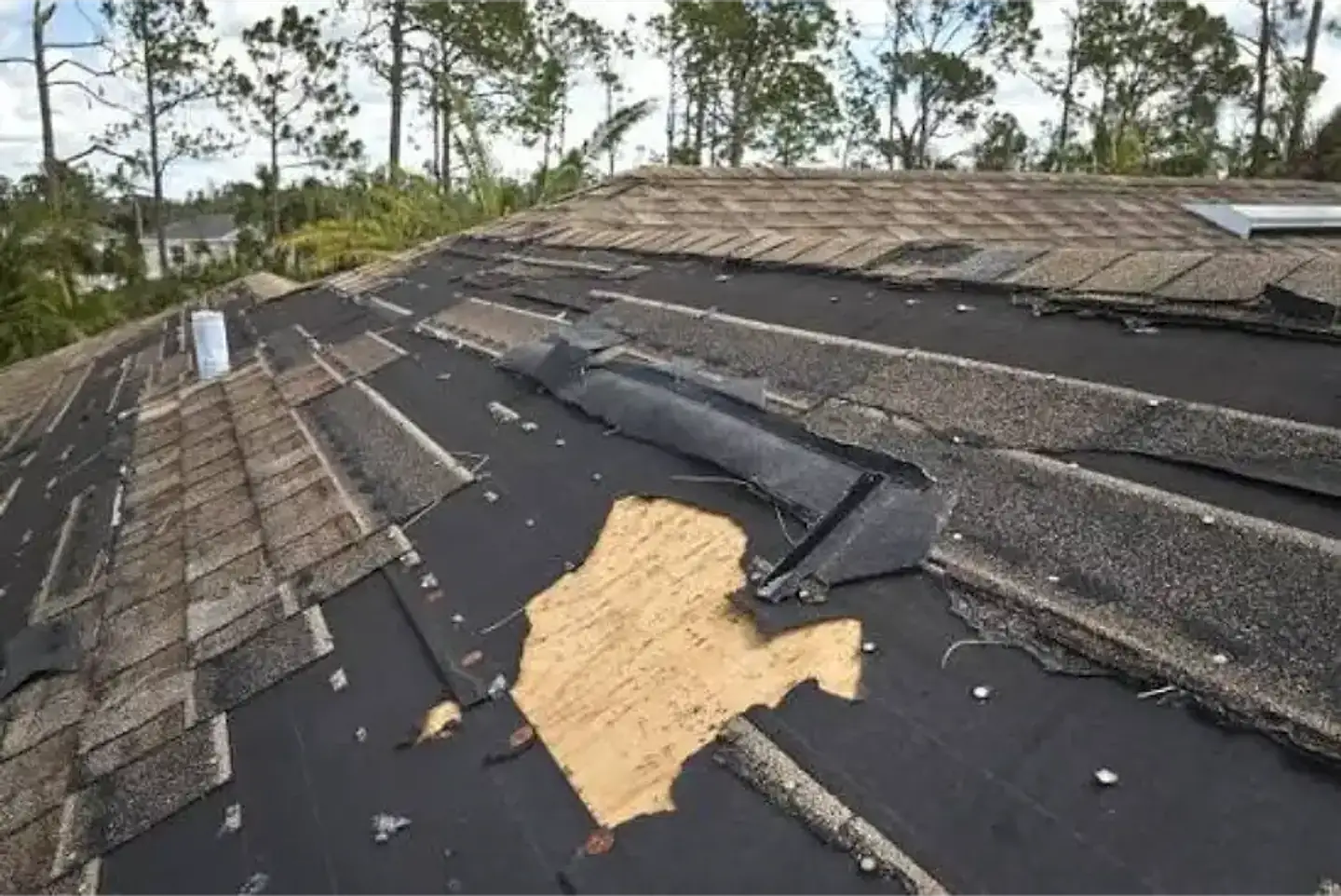
The most common roof problems in Sarasota are leaks and ceiling stains, wind-lifted or missing shingles, cracked or slipped tiles, worn underlayment, failed flashing, granule loss, soft or sagging decking and ponding water on flat roofs. Most start with sun, heat, heavy rain or storm wind. A single, local problem is usually a repair; several problems across the roof usually mean replacement.
Who this is for: Homeowners who have noticed a leak, stain, missing shingles, cracked tiles or a soft spot and want to know what it means before calling a roofer.
Why Do Sarasota Roofs Develop Problems?
Sarasota roofs wear out from heat, ultraviolet light, heavy rain, humidity and tropical-storm wind. Asphalt shingles dry out and shed granules, tile underlayment ages under tiles that still look fine, and sealants and flashing crack as the roof heats and cools every day.
Coastal homes add salt air, which corrodes fasteners and metal flashing faster. Any of these can turn a small weakness into a leak during the summer rainy season or the first strong storm.
| Symptom | Likely cause | Usual fix |
|---|---|---|
| Ceiling or wall stain | Leak at flashing, a penetration, a valley or worn underlayment | Find the entry point; repair if local, replace if widespread |
| Missing or lifted shingles | Storm wind, failed seal strips, aging shingles | Repair a few; replace when many slopes are affected |
| Cracked or slipped tiles | Foot traffic, impact, failed fasteners or adhesive | Replace tiles; check the underlayment beneath |
| Granules in gutters | Shingles wearing out under UV and heat | Inspection; often a sign replacement is near |
| Soft or sagging areas | Rotted decking from long-term moisture | Decking replacement, usually during a roof replacement |
| Water ponding on a flat roof | Poor drainage, sagging deck or clogged drains | Drainage correction or flat roof replacement |
| Rust at fasteners or flashing | Salt air and age | Replace corroded metal with coastal-rated parts |
What Causes a Roof Leak?
Most roof leaks start where the roof covering is interrupted, not in the middle of a slope. Flashing around chimneys, skylights and walls, pipe boots, valleys and roof-to-wall joints are the usual entry points. On tile roofs, the underlayment under the tiles is the real waterproofing layer, so a tile roof can leak even when every tile is intact.
Water travels along the deck and rafters before it shows up, so a ceiling stain is often several feet from the actual entry point. That's why a leak repair starts with tracing the path, not patching above the stain. If water is coming in now, see emergency roofing.
Why Are My Shingles Lifting, Curling or Missing?
Shingles lift when their seal strips fail, either from age or from wind getting under the edge. Curling and cupping come from years of heat and UV drying out the asphalt. Missing shingles are usually storm wind finishing off shingles that were already loose.
A few missing shingles on a younger roof can be repaired. Widespread curling, lifting on several slopes or repeated blow-offs mean the shingles are near the end of their life. See shingle roof replacement.
What Does a Cracked or Slipped Tile Mean?
A cracked or slipped tile lets water and sunlight reach the underlayment below, which then ages faster. Cracks often come from foot traffic, falling branches or impact; slipped tiles usually mean a failed fastener or adhesive.
Replacing a few tiles is a normal repair. If the underlayment is brittle or leaking in several places, the long-term fix is lifting the tiles and replacing the underlayment, which is covered on our tile roof replacement page.
Is Granule Loss a Problem?
Yes, when it's heavy. Granules protect asphalt shingles from UV. Some loss is normal on a new roof, but heavy granules in gutters or bare, dark patches on an older roof mean the shingles are wearing out and will deteriorate faster from here.
Why Is My Roof Sagging or Soft?
A soft or sagging section usually means the plywood decking under the roof has absorbed water over time and lost strength. It can also point to a framing problem. Either way, it needs an inspection soon, because damaged decking can't hold fasteners properly in high wind.
Rotted decking is replaced during a roof replacement. A good estimate explains how decking replacement is priced, for example per sheet, as covered in the cost guide.
What Is Flashing Failure?
Flashing is the metal that seals the joints where the roof meets walls, chimneys, skylights and valleys. Florida heat makes it expand and contract daily, which cracks sealant and loosens it over time; salt air corrodes it near the coast. Failed flashing is one of the most common sources of leaks, and it can often be repaired without replacing the roof.
What Problems Are Common on Flat Roofs?
Flat and low-slope roofs over lanais, porches and additions are prone to ponding water, seam failures, blistering and cracks at the edges. Ponding that stays more than a couple of days after rain speeds up membrane wear and points to a drainage problem that needs fixing at the same time as any membrane work.
Does the Problem Mean Repair or Replacement?
One problem in one place usually means a repair. Several problems across different slopes, an aging roof, or repairs that keep coming back usually mean replacement makes more sense. Florida's 2022 change to the 25% rule also means a large repair on a code-compliant roof no longer forces a full replacement by itself.
Our repair vs. replacement guide walks through the decision, and a roof inspection gives you photos of what's actually happening on your roof.
Found a Problem on Your Roof?
Book a free inspection and get photos of what we find, plus a written estimate.
FAQs
Roof Problem Questions
Why is my roof leaking only when it rains hard?
Heavy, wind-driven rain pushes water sideways under shingles, tiles and flashing that shed light rain fine. It usually points to worn flashing, a weak spot in the underlayment or lifted roofing near the edge.
Can a roof leak without visible damage outside?
Yes. Tile roofs often leak through aging underlayment under intact tiles, and leaks at flashing or pipe boots can be hard to spot from the ground.
Is a ceiling stain always a roof leak?
Not always. Air conditioning condensate lines, plumbing and condensation in the attic can also stain ceilings. An inspection that checks the attic usually tells them apart.
How fast should I deal with a roof problem?
Active leaks should be contained right away to limit interior damage and mold. Other problems are best inspected before the summer rainy season and hurricane season.
Free estimate
Request a Free Roof Inspection
Tell us what's going on with your roof and we'll follow up to schedule an inspection.
- 1Tell us about your roof using the form
- 2We schedule a convenient time to inspect
- 3You get photos, recommendations and a written estimate
Prefer to talk it through?
(941) 344-0051Get Your Free Roof Replacement Estimate
Takes about a minute. We'll follow up to schedule your inspection.
About this page
Written and reviewed by the Roof Replacement Sarasota team, a residential roofing contractor serving Sarasota, Florida. Last reviewed . General information only; requirements for your property are confirmed during an inspection. About Roof Replacement Sarasota
Sources: official references used on this page
- Florida Building Commission: Florida Building Code and product approval
- Florida Statutes §553.844: Roof repair and replacement rule as amended by SB 4-D (2022)
- NOAA National Hurricane Center: Tropical storm and hurricane forecasts